

Cold Pressed Oil Benefits: Nutrients, Types and Everyday Uses
Cold pressed oil benefits begin with the extraction method. Seeds, nuts or copra are pressed mechanically at a low temperature, so more of the natural aroma, colour and minor plant compounds remain in the oil.
Wooden and stone presses such as the marachekku were the traditional way of extracting oil in Indian villages. Today, cold pressed groundnut, gingelly, coconut and mustard oils are used for tempering, sautéing and regional recipes, where the natural flavour of the oil is part of the dish.
What Is Cold Pressed Oil and How Is It Made?
Cold pressed oil is edible oil extracted by mechanical pressing at a controlled low temperature, with the refining steps left out. Pressing creates friction heat, so the temperature limit is what separates cold pressed oil from other mechanically pressed oils. The oil temperature is generally kept below about 50°C.
The main stages are:
- Cleaning and drying of the seeds, nuts or copra
- Crushing and pressing in a screw press or a traditional wooden press
- Settling and filtering to remove fine solids
- Bottling directly after filtering
Cold pressing gives a lower yield than heated pressing, so more raw material is needed for each litre of oil. The oil that results keeps the colour and smell of the seed, which is why cold pressed oil benefits are linked so closely to how the oil is extracted. Many cold pressed oils in India are pressed from groundnut, gingelly seeds, coconut copra and mustard seeds.
Which Nutrients Make Up the Main Cold Pressed Oil Benefits?
The main cold pressed oil benefits come from minor compounds that refining reduces. A laboratory study on corn oil reported higher phenolic and carotenoid content in cold pressed samples than in refined ones. A study on soybean oil found that each refining stage lowered tocopherol and phenolic content, and a canola oil study found that traditional refining removed almost all polyphenols.
Results differ by oil. Tocopherol levels in cold pressed sunflower and rapeseed oils were close to those in refined versions, so the clearest difference lies in polyphenols and aroma compounds.
- Tocopherols: Natural forms of vitamin E that protect the oil during storage
- Polyphenols: Plant antioxidants that refining largely removes
- Unsaturated fatty acids: The main fats in groundnut and gingelly oil
- Aroma compounds: The source of the typical smell of each oil
Is Cold Pressed Oil Good for Health?
The health effect of an oil depends mostly on its fat composition. A 2024 Advances in Nutrition umbrella review of edible vegetable oil found that oils rich in monounsaturated and polyunsaturated fats, such as virgin olive oil, canola oil and rice bran oil, lowered total and LDL cholesterol, with evidence of moderate to very low certainty. The American Heart Association advises replacing saturated fat with unsaturated vegetable oils.
Groundnut and gingelly oil contain a large share of unsaturated fats, while coconut oil is mostly saturated fat and suits small quantities. Few trials compare cold pressed and refined oils on health outcomes directly, so the cold pressed oil benefits for the heart rest mainly on fat composition.
The cold pressed oil benefits supported by evidence are therefore the retention of natural antioxidants and solvent-free extraction, and these apply alongside moderate portions as part of a balanced diet.
What Are the Types of Cold Pressed Oil Used in Indian Kitchens?
Each cold pressed oil has its own flavour, which decides the dishes it suits. Groundnut, gingelly, coconut, mustard, and sunflower oil are the most common in Indian homes.
| Oil | Flavour | Common use |
|---|---|---|
| Groundnut oil | Mild and nutty | Sautéing, tempering, everyday curries |
| Gingelly oil | Earthy and rich | Tempering, podis, pickles, South Indian dishes |
| Coconut oil | Light coconut aroma | Curries, stir-fries, sweets |
| Mustard oil | Pungent and sharp | Pickles, fish dishes, tempering |
| Sunflower oil | Neutral and mild | Everyday sautéing, baking |
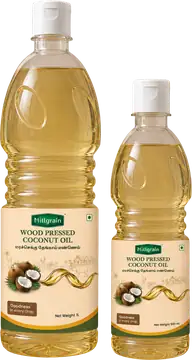
Cold pressed coconut oil uses range from curries to sweets. The types of cold pressed oil differ in flavour and fat composition, so using more than one oil across the week adds variety to meals and spreads the cold pressed oil benefits across different fats.
How Does Cold Pressed Oil Differ From Refined Oil?
Refined oil usually passes through degumming, neutralising, bleaching, and deodorising, often after solvent extraction. The cold pressed vs refined oil difference shows in colour and aroma, because cold pressed oil keeps both when these steps are left out, and the cold pressed oil benefits apply to oil produced by pressing alone.
- Extraction: Mechanical pressing at low temperature for cold pressed oil, and multiple processing stages for refined oil
- Colour and aroma: Golden tones and a clear seed aroma for cold pressed oil, and a pale colour with a mild smell for refined oil
- Heat use: Refined oils generally tolerate higher heat, while cold pressed oils suit medium heat
What Is the Smoke Point of Cold Pressed Oil and Which Dishes Suit It?
The smoke point is the temperature at which an oil begins to smoke and break down. The cold pressed oil smoke point is generally lower than that of the refined version of the same oil. Unrefined coconut oil and unrefined sesame oil are both listed at about 177°C, and values for other oils change with seed quality and filtering.
Choosing cold pressed oil for cooking is easier when the oil is matched to the method, which keeps the flavour and the cold pressed oil benefits intact.
- Tempering and sautéing: Groundnut, gingelly and coconut oil at medium heat
- Finishing: Gingelly oil drizzled over podi or rice after cooking
- Shallow frying: Mustard and groundnut oil at moderate heat, removing the pan from the flame at the first sign of smoke
- Deep frying: Refined oils with higher smoke points are the usual choice for repeated high heat
How Can Pure Cold Pressed Oil Be Identified?
Knowing how to identify pure cold pressed oil starts with the label, followed by simple checks at home. These checks give a useful first indication of quality, although laboratory testing is the only complete confirmation.
- Label: Terms such as cold pressed, wood pressed or kachi ghani with a single ingredient listed
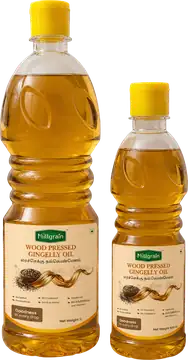
- Aroma: Wood pressed groundnut oil carries a roasted peanut smell, and every cold pressed oil smells of its own seed
- Colour: A natural golden or amber tone, usually slightly cloudy
- Sediment: A small amount of fine residue at the bottom of the bottle is common
- Packaging: Dark glass or a food-grade container that shields the oil from light
An oil that smells neutral and looks clear and pale has usually been refined, whatever the front label suggests. Oil that meets these checks is more likely to retain the cold pressed oil benefits associated with low-temperature pressing.
How Should Cold Pressed Oil Be Chosen and Stored at Home?
For households that cook with Pure Organic foods, cold pressed oils are chosen according to the dish, with gingelly or coconut oil for regional flavour and groundnut oil for everyday sautéing. Varying the oil across the week spreads the cold pressed oil benefits over different fat types and aroma compounds.
Store the bottle in a cool, dark place away from the stove, close the cap tightly after every use and choose a bottle size that finishes within a few weeks, since cold pressed oil benefits are retained longer when the oil is used fresh. A sharp or stale smell indicates that the oil has aged and should be replaced.
Frequently asked questions
What is cold pressed oil?
Cold pressed oil is edible oil extracted by mechanical pressing at a low temperature, with solvents and refining left out. It keeps more of the natural aroma, colour, and minor plant compounds of the seed.
Is cold pressed oil healthier than refined oil?
Laboratory comparisons show higher phenolic content in cold pressed oils, and the extraction is solvent-free. Direct health trials are few, so portion size still matters.
Can cold pressed oil be used for frying?
Shallow frying and sautéing at medium heat suit most cold pressed oils. Deep frying at high temperature suits refined oils with higher smoke points.
How can cold pressed oil be stored properly?
Keep the oil in a cool, dark place in a tightly closed dark glass or food-grade container. Store it away from the stove and use it within the period stated on the label.
Which cold pressed oil is suitable for daily cooking?
Groundnut, gingelly and coconut oil are widely used in daily South Indian cooking. The right choice depends on the dish and the flavour preferred.