
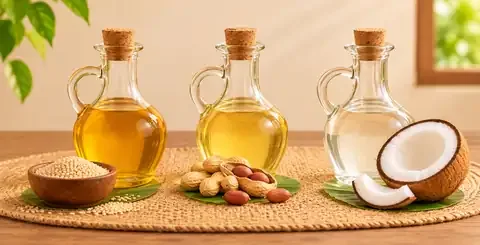
Best Oil for Diabetes: Gingelly, Groundnut or Coconut Oil?
No single oil is the best oil for diabetes. Traditional cold-pressed oils work well in an Indian kitchen if you use small, measured amounts and rotate them through the week. Gingelly oil (nallennai) and groundnut oil (kadalai ennai) are good everyday choices. Coconut oil (thengai ennai) has a place too, in smaller portions, because it is high in saturated fat.
Oil contains no carbohydrates, so it does not raise blood sugar directly. What it changes is the type and amount of fat on your plate, and over time that affects insulin sensitivity, body weight, and heart health.
Key Takeaways
- Gingelly and groundnut oil are the better everyday oils for diabetes, because both are high in unsaturated fat and low in saturated fat.
- In a Chennai study of 1,875 adults, metabolic syndrome was least common among people cooking with groundnut and sesame oil.
- Coconut oil is mostly saturated fat and raises LDL cholesterol compared with plant oils, so keep it for a few dishes a week.
- Quantity matters as much as the oil: about 4 to 6 teaspoons per person a day, spread across all meals.
Does cooking oil affect blood sugar levels?
Indirectly, yes. When families look for a cooking oil for diabetics, the real question is about fat type and quantity. Every oil is close to 100% fat and gives about 9 calories per gram. That works out to roughly 45 calories in each teaspoon, whichever oil is in the bottle.
Choosing the best oil for diabetes starts with knowing the three main fat types:
- MUFA (monounsaturated fat): found in good amounts in groundnut and gingelly oil. It is linked with better cholesterol balance.
- PUFA (polyunsaturated fat): includes omega-6 and omega-3. Gingelly oil has a fairly even mix of MUFA and PUFA. Sunflower oil is mostly omega-6.
- SFA (saturated fat): the main fat in coconut oil and a large share of palm oil.
This matters because people with diabetes already carry a higher risk of heart disease. Diabetes and heart health experts generally suggest keeping saturated fat in check for this reason.
Chennai has local research on this question. In the CURES study, the Madras Diabetes Research Foundation looked at the cooking oils of 1,875 adults in the city. Metabolic syndrome was more common among sunflower oil users (30.7%) than among palmolein users (23.2%). It was least common among people using traditional groundnut and sesame oils (17.1%). It was an observational study, so it shows a link, not proof that one oil causes the difference.
Which is the best oil for diabetes in Indian cooking?
The most useful answer is a rotation, not a single bottle. ICMR-NIN's 2024 dietary recommendations say no single vegetable oil has the right balance of essential fatty acids. They suggest blending two oils or rotating them.
Here is how the common oils in Indian homes compare:
| Oil (Tamil name) | Main fat type | Works well for | Keep in mind |
|---|---|---|---|
| Gingelly/sesame (nallennai) | Balanced MUFA and PUFA, plus lignans | Tempering, kuzhambu, mixing with podi | Distinct flavour; best on low to medium heat |
| Groundnut (kadalai ennai) | Mostly MUFA | Poriyal, dosa, occasional frying | Handles higher heat; portions still count |
| Coconut (thengai ennai) | Mostly saturated (about half lauric acid) | Avial, thoran, kootu | Use a smaller share of your weekly oil |
| Mustard (kadugu ennai) | MUFA with some omega-3 | North and East Indian curries | Pungent; more of a regional habit |
| Rice bran | MUFA and PUFA, with oryzanol | Everyday sautéing | Usually sold refined |
| Sunflower (suriyakanthi ennai) | Mostly omega-6 PUFA | A rotational oil rather than the only oil | Linked with higher metabolic risk in the CURES study |
| Palmolein | High saturated fat | Occasional use | Common in commercial snacks and sweets |
Gingelly oil (nallennai)
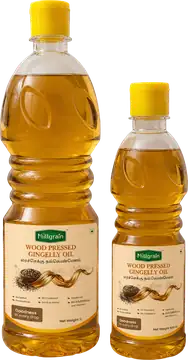
Gingelly oil is a natural fit for Tamil cooking, from vatha kuzhambu to idli with podi. It contains sesamin and sesamol, antioxidant compounds found mainly in sesame.
Research on gingelly oil for diabetes is still growing, but a few small clinical studies in people with type 2 diabetes have tested it directly. In one 60-day study of 60 patients, published in Clinical Nutrition in 2011, sesame oil used alongside the diabetes drug glibenclamide lowered blood glucose by 36% and HbA1c by 43%. The studies are small, and most participants stayed on their medication, so treat these as early findings. Even so, it is one reason gingelly comes up so often when Tamil families ask about the best oil for diabetes.
To read more about this traditional oil beyond the kitchen, see these gingelly oil benefits for skin, hair and everyday health.
If you are starting to use gingelly oil for diabetes-friendly meals, a cold-pressed gingelly oil works best for tempering mustard seeds and curry leaves on medium heat, or as a spoonful drizzled over podi rice.
Groundnut oil (kadalai ennai)
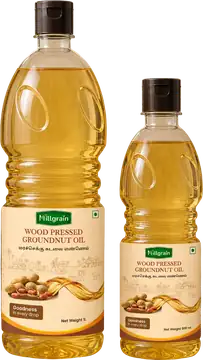
Groundnut oil is mostly monounsaturated fat and also provides some vitamin E. Its mild taste and higher heat tolerance make it practical for poriyal, dosa and the occasional batch of vadai. The case for groundnut oil for diabetes rests mainly on this fat profile and on the Chennai study, where it was one of the two traditional oils used by the lower-risk group.
Is coconut oil good for diabetes?
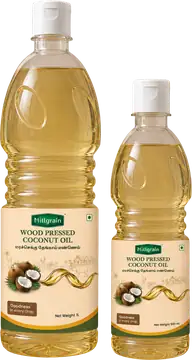
Coconut oil for diabetes is one of the most searched oil questions, and the honest answer is that it works best in moderation. About half of coconut oil is lauric acid, a medium-chain fat. That is why it is often marketed for metabolism. It is still mostly saturated fat, so it suits a smaller share of your weekly oil rather than every dish.
What the research says so far:
- A 2020 review of 16 clinical trials found that coconut oil raised LDL ("bad") cholesterol by about 10 mg/dL compared with plant oils such as groundnut or sunflower. It showed no benefit for blood sugar control or body weight.
- Most other studies on coconut oil for diabetes were done in animals or small groups of people.
- A 2020 case report described a man with type 2 diabetes on insulin whose blood sugar dropped too low after he began taking coconut oil as a supplement. His insulin dose had to be reduced. A single case like this does not show that coconut oil treats diabetes.
- Using coconut oil in cooking and taking spoonfuls of it as a supplement are two different things. Talk to your doctor before trying the second.
Because diabetes already raises heart risk, the LDL effect is the main reason to limit coconut oil. In practice, keep it for dishes where its flavour matters, like avial, thoran, kootu, and Kerala-style curries. Use gingelly and groundnut oil for the rest of the week.
Cold-pressed vs refined oil: does it matter for diabetics?
Cold-pressed oil (marachekku ennai) is pressed out of the seed mechanically, with little heat. This keeps more of the oil's natural vitamin E, antioxidants, and aroma. Refined oil goes through high heat, chemical solvents, bleaching, and deodorising. That gives it a neutral taste but strips many of those compounds.
Two points to keep in mind:
- When choosing a cooking oil for diabetics, remember that cold pressing keeps the nutrients but not fewer calories. A teaspoon is still a teaspoon.
- Cold-pressed oils have a lower smoke point than refined oils, so medium heat suits them best.
If you are switching over gradually, cold-pressed oils in gingelly, groundnut, and coconut cover most South Indian cooking between the three of them.
How much oil should a diabetic use per day?
Quantity matters as much as the type of oil. ICMR-NIN advises keeping visible fat, which includes cooking oil, ghee and butter, to a moderate level. For most adults, this works out to about 20 to 30 g a day, or roughly 4 to 6 teaspoons, spread across all meals.
As a household benchmark, a family of four using about 25 g per person a day goes through a little over 3 litres of oil a month. If your monthly use is well above that, gradually cutting down is a good first step. Your doctor or dietitian may suggest a different target based on your weight, medicines and lipid profile.
How to rotate oils in a South Indian kitchen
For most homes, the best oil for diabetes is really a set of two or three oils, each matched to the dishes it already suits:
| Dish | Oil that suits it |
|---|---|
| Tadka for sambar, rasam, dal | Gingelly |
| Kara kuzhambu, vatha kuzhambu | Gingelly |
| Poriyal, dosa, chapathi | Groundnut |
| Avial, thoran, kootu | Coconut |
| Occasional vadai or bajji | Groundnut |
Keep two or three bottles on the counter and reach for them by dish. Over a week, you get a natural mix of fats without having to plan it.
The oil is only part of the plate. Pairing these oils with whole grains in place of polished rice makes a bigger difference to post-meal sugar levels. Foxtail millet (thinai) and kodo millet (varagu) are good places to start. This comparison of the best millet for diabetes sets out how the common varieties differ by glycaemic index.
Cold-pressed oils, whole grains and freshly ground podi make up the everyday pantry that the Pure Organic foods range is built around. Changing even one staple at a time adds up over a month.
Quick Tips
- Measure whichever oil you pick. Even the best oil for diabetes still adds calories, so a measured teaspoon per person for tempering keeps portions honest.
- Use frying oil once. Reheated oil breaks down into polar compounds. FSSAI sets a limit on these for food businesses, and the same care is worth following at home.
- Store cold-pressed oil away from the stove. A dark glass or steel bottle in a cool cupboard keeps it fresh longer, since it has no preservatives.
- Read "cholesterol-free" labels calmly. All plant oils are naturally cholesterol-free. ICMR-NIN notes that labels like this say little about how healthy an oil really is.
- Let the pan heat gently. Cold-pressed oils start to smoke sooner, so a medium flame protects both the oil and the flavour.
- Track your numbers. After changing oils, note your fasting sugar and lipid results at your next check-up and go over them with your doctor.
Frequently asked questions
Which is the best oil for diabetes for daily Indian cooking?
A rotation of cold-pressed gingelly oil and groundnut oil, with some coconut oil, is a practical choice for most South Indian homes. This matches ICMR-NIN's advice to rotate or blend oils rather than rely on one. Keep the total to about 4 to 6 teaspoons per person a day.
Is coconut oil safe for people with diabetes?
Coconut oil for diabetes works best in small amounts, since it is mostly saturated fat and raises LDL cholesterol compared with plant oils. Use it for dishes like avial and thoran, and use other oils for the rest of your cooking. A cold-pressed coconut oil for cooking keeps its natural aroma, so a little goes a long way.
Is groundnut oil good for diabetics?
Groundnut oil is mostly monounsaturated fat and suits medium-to-high heat cooking like poriyal and dosa. In the Chennai CURES study, people using groundnut and sesame oil had fewer metabolic risk factors than sunflower oil users. A wood-pressed groundnut oil keeps more of its natural vitamin E than refined versions.
How should I use gingelly oil for diabetes-friendly cooking?
Gingelly oil works best for tempering, kuzhambu, and low- to medium-heat cooking. For occasional deep frying, groundnut oil is the more heat-stable cooking oil for diabetics to reach for. Either way, keep fried foods to an occasional treat and use the oil only once.
Are blended or "diabetic-friendly" branded oils better than traditional oils?
Some studies on sesame and rice bran oil blends have shown modest improvements in blood sugar and lipids. Rotating two or three traditional oils at home follows the same principle of balancing fats. The amount of oil you use and what you eat with it still matter more than any label.