
10 Healthy Millet Sweets for Diwali (Tamil Bakshanam Edition)
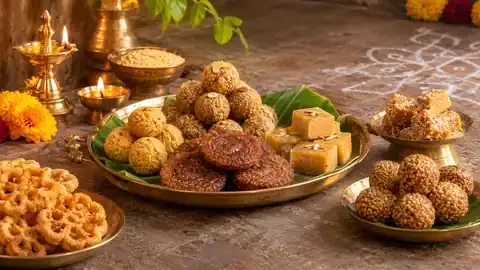
Millet Diwali sweets bring Tamil Diwali bakshanam together with grains such as ragi, thinai and kambu. Bakshanam is the Tamil word for the sweets and snacks prepared for festivals, and Deepavali kitchens fill with adhirasam, suzhiyam, laddu and halwa in the days before the festival.
Each of these millet Diwali sweets keeps the jaggery and ghee in place and changes only the flour. The result tastes close to the original and brings the fibre and minerals of whole grains to the festival plate.
Why Do Millets Suit Tamil Bakshanam?
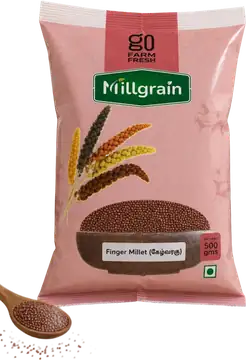
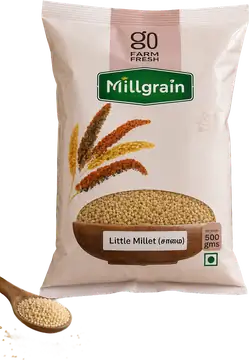
Among the types of millets, thinai (foxtail millet), kambu (pearl millet), kezhvaragu or ragi (finger millet), samai (little millet), varagu (kodo millet) and kuthiraivali (barnyard millet) have long been part of Tamil Nadu's food, which makes millet Diwali sweets a natural extension of the festival table. Their flours roast well in ghee, take on the flavour of jaggery, and hold shape in laddu and halwa.
Millets are whole grains that provide dietary fibre, and ragi is known for its calcium content. Millet flour is a simple way to prepare healthy Diwali sweets that keep a familiar taste. Millet Diwali sweets also sit easily beside South Indian Diwali sweets such as adhirasam, payasam and pongal.
Which Millet Is Used in Each of These Sweets?
Six millets and one multi-millet blend cover the ten millet Diwali sweets, and each millet carries a Tamil name familiar from the kitchen. Jaggery is the sweetener in nine of them, and honey sweetens the thinai and urundai.
| Sweet | Millet | Tamil name | Form |
|---|---|---|---|
| Ragi adhirasam | Finger millet | Kezhvaragu | Fried sweet |
| Thinai suzhiyam | Foxtail millet | Thinai | Fried sweet ball |
| Kambu urundai | Pearl millet | Kambu | Laddu |
| Ragi halwa | Finger millet | Kezhvaragu | Halwa |
| Varagu Mysore pak | Kodo millet | Varagu | Barfi-style sweet |
| Kuthiraivali payasam | Barnyard millet | Kuthiraivali | Payasam |
| Samai sakkarai pongal | Little millet | Samai | Sweet pongal |
| Thinai then urundai | Foxtail millet | Thinai | Laddu |
| Multi-millet laddu | Mixed millets | Several | Laddu |
| Millet coconut barfi | Little millet | Samai | Barfi |
1. Ragi Adhirasam
Adhirasam is one of the best-known sweets of Deepavali in Tamil homes. Flour from organic ragi is kneaded with jaggery syrup cooked to a soft ball stage, along with cardamom and often a small portion of rice flour for binding, then shaped into flat discs and fried. Resting the dough for a few hours before frying gives a soft centre and a crisp edge. Ragi gives the sweet a deeper brown colour.
2. Thinai Suzhiyam
Suzhiyam is a fried ball with a filling of cooked gram dal, jaggery, grated coconut and cardamom. In the millet version, thinai flour replaces maida in the outer batter, and the filling stays the same. A batter thick enough to coat the filling gives an even golden crust. Thinai suzhiyam is among the millet Diwali sweets best eaten fresh and warm.
3. Kambu Urundai
A millet laddu recipe often starts with roasted flour, and kambu urundai follows the same pattern. Flour from kambu millet is dry roasted until aromatic, then mixed with powdered jaggery, melted ghee, cardamom and chopped nuts. Shaping the mixture while it is still warm helps the balls hold together. Among millet Diwali sweets, kambu urundai is one of the simplest to make, since it needs only roasting, mixing and shaping.
4. Ragi Halwa
Ragi halwa, also called kezhvaragu halwa, is a glossy sweet cooked from ragi flour whisked into water or milk. The mixture is cooked with jaggery and ghee until it thickens and turns shiny, then finished with cardamom and roasted cashews. Steady stirring keeps the halwa smooth. Ragi halwa is served warm, often with a spoon of ghee on top. Ragi provides calcium and dietary fibre, and ragi nutritional information lists both among its main nutrients.
5. Varagu Mysore Pak
Mysore pak has its roots in Karnataka but is a popular sweet on Tamil Deepavali plates. In the millet version, kodo millet flour roasted in ghee replaces part of the gram flour, and jaggery syrup replaces the sugar syrup. Adding the ghee in small portions and cutting the sweet into squares while it is still warm gives a clean finish. Varagu Mysore pak is a good example of millet Diwali sweets that keep the look of the original.
6. Kuthiraivali Payasam
Kuthiraivali, valued for its barnyard millet benefits, cooks quickly into soft grains that suit a payasam. The millet is boiled until tender, then simmered with strained melted jaggery, thin coconut milk and cardamom, and topped with cashews and raisins fried in ghee. Adding the coconut milk at low heat keeps the payasam smooth. Kuthiraivali payasam is served warm or chilled.
7. Samai Sakkarai Pongal
Sakkarai pongal is the sweet version of ven pongal, and samai little millet takes the place of rice. The grain cooks with a small portion of moong dal until soft, then blends with melted jaggery, ghee, cardamom, cashews, and raisins. A light mash after cooking gives the creamy texture expected of pongal. Sakkarai pongal is a common festival dish in Tamil homes and temples.
8. Thinai Then Urundai
Then means honey in Tamil, and this small laddu uses honey as the binder in place of jaggery syrup. Thinai, valued for its foxtail millet benefits, is roasted into flour, mixed with honey and a little ghee, flavoured with cardamom, and rolled into small balls. Cooling the flour completely before adding the honey gives a mixture that is easy to roll. These small laddus are easy to carry and share.
9. Multi-Millet Laddu
A multi-millet laddu combines flours such as ragi, kambu, thinai, and samai in one sweet. The flours are roasted together in ghee, mixed with powdered jaggery and cardamom, and finished with roasted peanuts or sesame seeds for texture. The mix of grains gives a rounded, nutty flavour. A multi-millet laddu is a practical choice among millet Diwali sweets when several grains are already in the kitchen.
10. Millet Coconut Barfi
Coconut barfi is a familiar Tamil Deepavali sweet, and a spoonful of roasted little millet flour adds body and a nutty note. Grated coconut, jaggery, and the flour are cooked together until thick, then spread on a greased tray and cut into pieces. Cooking until the mixture leaves the sides of the pan gives firm pieces. Millet coconut barfi keeps the familiar Tamil taste of the original while using millet flour.
How Can Millet Diwali Sweets Turn Out Well and Stay Fresh?
Millet flour absorbs more moisture than wheat flour, so doughs and batters for millet Diwali sweets may need a little extra liquid or a short resting time. Dry roasting the flour in a pan or in ghee until aromatic removes the raw taste and gives a nutty flavour.
Fried sweets such as adhirasam and suzhiyam, along with roasted laddus, stay fresh in an airtight container kept in a cool, dry place. Sweets made with fresh coconut or milk, including the barfi, payasam and halwa, are kept refrigerated and eaten soon after making.
Jaggery is a form of sugar, so portion size still matters. Small pieces served on a mixed plate suit the tradition of sharing and keep servings modest. Diwali sweets with jaggery taste best when freshly made, and a few millet Diwali sweets prepared before the festival allow families to share a varied plate.
A Deepavali Plate Built on Everyday Grains
Grains that belong among Pure Organic foods, such as ragi, thinai and kambu, fit naturally into Deepavali bakshanam. Adhirasam, suzhiyam, laddu, halwa and payasam all keep their shape and flavour when millet flour replaces rice flour, maida or besan. Jaggery and ghee keep these millet Diwali sweets close to the recipes remembered from home, and each sweet carries the taste of a grain that Tamil kitchens have used for generations.
Frequently asked questions
What is bakshanam?
Bakshanam is the Tamil word for the sweets and snacks prepared for festivals such as Deepavali. Adhirasam, suzhiyam, laddu, murukku, and mixture are common examples.
Which millet is best for Diwali sweets?
Ragi, kambu and thinai are commonly used because their flours roast well and bind easily with jaggery. The best choice depends on the sweet, with ragi suiting halwa and adhirasam and kambu suiting laddu.
Can millet sweets be made with jaggery instead of sugar?
Yes, jaggery works well in laddu, halwa, payasam and pongal, and it is the sweetener in most Tamil bakshanam. Powdered jaggery suits laddu, while melted and strained jaggery suits halwa and payasam.
How should millet laddus be stored?
Millet laddus stay fresh the longest in an airtight container kept in a cool, dry place. Laddus made with fresh coconut or added milk are kept refrigerated.
Are millet sweets suitable for diabetics?
Millet sweets sweetened with jaggery or honey still contain sugar, so portion size matters. People managing blood sugar should consult a doctor or dietitian before adding them to a regular diet.