
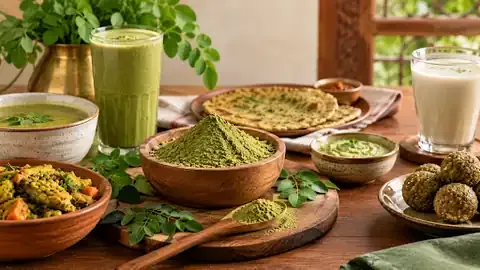
Moringa Powder Recipes: 10 Easy Ideas for Everyday Meals and Drinks
Moringa powder recipes make it simple to bring drumstick leaves into daily meals all year round. The fine green powder blends into rotis, dals, chutneys, smoothies and warm drinks within minutes. This collection of moringa powder recipes shares ten easy ideas with clear quantities, so every dish turns out balanced and flavourful. Each recipe uses everyday ingredients such as whole wheat flour, curd, milk and lentils, so the dishes fit easily into regular family meals. The ideas cover breakfast, lunch, dinner and drinks, with simple steps that suit both new and experienced home cooks.
What Moringa Powder Is and How It Tastes
Moringa powder is made by drying and finely grinding the leaves of the moringa tree, known in Indian homes as drumstick leaves or murungai keerai. Moringa leaf powder has an earthy, grassy flavour that is similar to matcha or spinach. Drumstick leaf powder pairs well with familiar tastes such as banana, lemon, cumin, curd and green chilli, which keep the flavour mild and pleasant. Moringa powder also works in millet dishes such as upma, pongal and dosa, and the different types of millets in India each suit these dishes in their own way. Knowing how to use moringa powder in the right dishes is the key to enjoying it every day.
How Much Moringa Powder to Add to Recipes
Half a teaspoon per serving is a comfortable starting point for moringa powder recipes. After a week or two, many people move up to one teaspoon. A commonly shared moringa powder dosage for daily use ranges from one to two teaspoons, which is about 3 to 6 grams. Keeping the total across the day within that range makes it easy to enjoy several moringa powder recipes in one week, and using moringa safely starts with a small amount that increases gradually.
Moringa Powder Recipes for Breakfast
Breakfast is an easy time to begin, because flours, batters, and warm grains carry the flavour of moringa very well. These moringa powder recipes take just a few minutes of extra effort.
1. Moringa Roti or Paratha
Add 1 teaspoon of moringa powder to about 2 cups of whole wheat flour, which makes 4 to 5 rotis. Mix in a pinch of salt and half a teaspoon of cumin seeds, then knead with warm water into a soft dough. Roll the dough and cook on a hot tawa with a little ghee. A moringa paratha pairs well with curd or a tangy pickle.
2. Moringa Uttapam or Adai
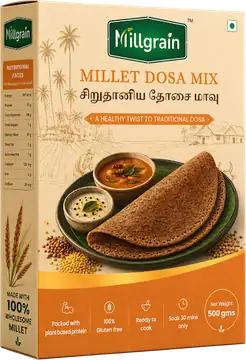
Stir 1 teaspoon of moringa powder into 1 cup of ready uttapam or adai batter, or into batter prepared from a millet dosa mix in the usual way. Spread the batter on a hot pan and top with chopped onion, tomato and coriander. Cook both sides until golden.
3. Moringa Oats Porridge
Cook half a cup of oats in 1 cup of milk or water until creamy. In the last minute, stir in half a teaspoon of moringa powder.
Moringa Powder Recipes for Lunch and Dinner
Indian lunch and dinner dishes already carry plenty of spices and herbs, so recipes using moringa powder fit in naturally. These Indian moringa powder recipes build on dishes already served at most tables.
4. Moringa Dal or Sambar
Prepare a pot of dal or sambar for two to three people as usual. After the tempering is added, stir in half a teaspoon of moringa powder and switch off the flame.
5. Moringa Raita
Whisk 1 cup of curd until smooth. Add half a grated cucumber, a pinch of roasted cumin powder, salt and half a teaspoon of moringa powder. Chill for ten minutes before serving alongside rice or roti. Dosa and pongal prepared from an instant dosa and pongal mix pair well with moringa raita as a cooling side.
6. Green Chutney with Moringa
Blend 1 cup of coriander leaves, 2 green chillies, a small piece of ginger, the juice of half a lemon and salt with a few tablespoons of water. Add 1 teaspoon of moringa powder and blend again until smooth.
7. Moringa Upma or Khichdi
Cook upma or khichdi in the usual way. Just before serving, sprinkle half a teaspoon of moringa powder per serving and fold it in gently.
Moringa Drinks and Smoothies
A moringa powder smoothie or warm drink is a quick option for busy mornings. Whisking or blending helps the fine powder mix smoothly.
8. Banana Moringa Smoothie
Blend 1 ripe banana, 1 cup of chilled milk, 4 soaked almonds and half a teaspoon of moringa powder until creamy. The natural sweetness of banana keeps the flavour mellow.
9. Warm Moringa Milk
Warm 1 cup of milk with a pinch of turmeric and 1 teaspoon of jaggery powder. Whisk in half a teaspoon of moringa powder until fully blended. This is a soothing way to take moringa powder with milk in the morning or early evening.
10. Moringa Lemon Water or Tea
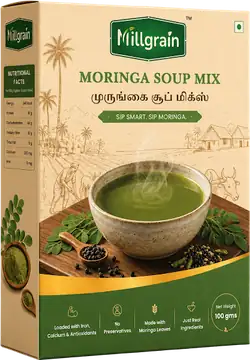
Whisk half a teaspoon of moringa powder into 1 cup of warm water. Add a squeeze of lemon and a little honey, then stir well and sip. For moringa powder tea, let the cup rest for two to three minutes and stir again before drinking. For a savoury evening option, a cup of moringa soup mix stirred into hot water or warm milk is a simple choice.
Quick Reference for Every Recipe
The table below brings all ten moringa powder recipes together, so the right quantity is easy to find.
| Recipe | Meal | Moringa Powder | When to Add |
|---|---|---|---|
| Roti or paratha | Breakfast | 1 teaspoon for 4 to 5 rotis | While kneading the dough |
| Uttapam or adai | Breakfast | 1 teaspoon per cup of batter | Into the batter |
| Oats porridge | Breakfast | ½ teaspoon | In the last minute |
| Dal or sambar | Lunch | ½ teaspoon per pot | After the tempering |
| Raita | Lunch | ½ teaspoon per cup of curd | After whisking |
| Green chutney | Lunch or dinner | 1 teaspoon per batch | In the blender |
| Upma or khichdi | Dinner | ½ teaspoon per serving | Just before serving |
| Banana smoothie | Snack | ½ teaspoon | In the blender |
| Warm milk | Evening | ½ teaspoon per cup | Whisked into warm milk |
| Lemon water or tea | Morning | ½ teaspoon per cup | Stirred into warm water |
Tips for Cooking with Moringa Powder
Moringa powder recipes for cooked dishes such as dal, upma and khichdi turn out best when the powder is added near the end of cooking, which keeps the colour bright and the flavour fresh. An airtight, dry container kept in a cool, shaded cupboard helps the powder stay fragrant for longer. Knowing how to cook millets with proper soaking gives a soft, even base for dishes like upma and pongal that carry moringa powder. The best time to take moringa powder is usually morning or lunch, which fits naturally with breakfast, dal and roti.
Adding Moringa Powder to Daily Meals
Ten simple moringa powder recipes, made with everyday Pure Organic foods such as whole wheat flour, curd and lentils, fit easily into breakfast, lunch, dinner and drinks. Moringa powder is a food that supplies amino acids, vitamins, minerals, and antioxidant compounds from Moringa oleifera leaves, and small amounts enjoyed with meals suit most people. Women who are pregnant or breastfeeding, people taking thyroid or blood pressure medicines, and families preparing moringa powder recipes for young children can check with a doctor or dietitian first.
Starting with half a teaspoon and choosing familiar dishes keeps every recipe enjoyable. Trying one recipe this week is an easy way to make moringa powder a regular part of home cooking.
Frequently asked questions
How can moringa powder be eaten daily?
Half a teaspoon can be mixed into roti dough, dal, curd or a morning smoothie. Choosing one familiar dish each day makes the habit easy to follow.
How much moringa powder is suitable per day?
Many people begin with half a teaspoon and move up to one or two teaspoons over a few weeks. A doctor or dietitian can suggest the best amount for each person.
Can moringa powder be taken with milk?
Yes, half a teaspoon whisked into warm milk with turmeric and jaggery makes a soothing drink. Whisking well helps the powder blend evenly.
What is the best time to take moringa powder?
Morning and lunch are popular choices because the powder blends easily into meals at those times. Taking it earlier in the day also suits most daily routines.
Is moringa powder suitable for children?
A small pinch mixed into roti dough, porridge or a smoothie is a gentle way to introduce it. A paediatrician can confirm the right amount for each child.