
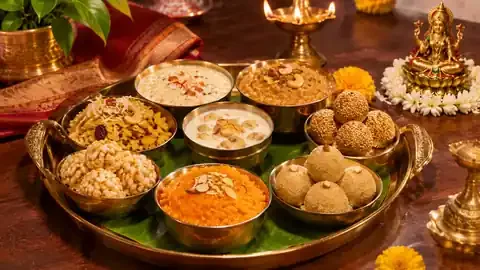
Diwali Prasad Recipe: 8 Easy Offerings for Lakshmi Puja
A Diwali prasad recipe begins with a simple idea: food prepared fresh, offered to the deity first and then shared with the family. On Diwali evening, Lakshmi and Ganesha are worshipped together, and the offering is called naivedyam in South India and bhog in the north.
Rice, semolina, sesame, and puffed rice turn into sweets that cook quickly and divide easily into small portions for the plate. Milk, ghee, and jaggery supply the flavour in nearly every one of them.
What Is Diwali Prasad and Why Is It Offered?
Prasad is food that is first offered to the deity and then received as a blessing. Naivedyam is the offering itself, and prasad is what the family eats afterwards. A Diwali prasad recipe therefore follows two rules: simple vegetarian ingredients and a freshly cooked dish.
Lakshmi Puja is performed on Diwali evening, when homes are cleaned, lamps are lit, and sweets are placed before the goddess. Ganesha is worshipped first in the same puja, so laddu, a sweet also found in Ganesh Chaturthi prasad recipes, often joins the plate. Diwali naivedyam recipes in the south and Diwali bhog recipes in the north draw on the same base of milk, ghee, jaggery, and rice.
Which Diwali Prasad Recipe Suits Lakshmi Puja?
Lakshmi Puja prasad ranges from milk-based offerings cooked fresh to dry laddus that keep for a day.
| Prasad | Main ingredients | Prepared |
|---|---|---|
| Panchamrit | Milk, curd, honey, ghee, sugar | Same day |
| Sweet pongal | Rice, moong dal, jaggery, ghee | Same day |
| Rava kesari | Semolina, ghee, sugar, saffron | Same day |
| Kheer | Milk, rice, sugar, cardamom | Same day |
| Sweet poha | Flattened rice, jaggery, coconut | Same day |
| Puffed rice laddu | Puffed rice, jaggery | Day before |
| Sesame laddu | Sesame seeds, jaggery | Day before |
| Rava laddu | Semolina, ghee, coconut, sugar | Day before |
1. Panchamrit
Panchamrit means five nectars. Milk, curd, honey, ghee and sugar are mixed in small quantities and offered in a small bowl. About half a cup of milk, a quarter cup of curd, and a spoon each of honey, ghee, and sugar suit a small plate. Gentle stirring keeps the curd smooth. The South Indian panchamirtham combines banana, jaggery, dates, ghee, and cardamom instead.
2. Sweet Pongal
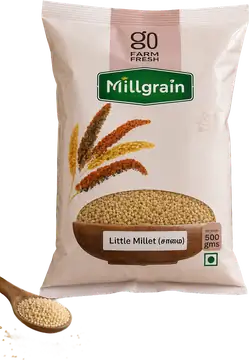
Sweet pongal is a Diwali prasad recipe made in many South Indian homes and one of the well-known South Indian prasad recipes. Rice and a small portion of moong dal are cooked until soft, about one cup of rice to a quarter cup of dal with four cups of water, and samai little millet can replace the rice in a millet version. Jaggery, about one cup, is melted and strained, then simmered with the rice for five minutes along with ghee and cardamom. Cashews and raisins fried in ghee finish the dish.
3. Rava Kesari
Rava kesari uses semolina roasted in ghee until it smells nutty, and rava made from thinai can replace the semolina in a millet version. Water is added in double the quantity of the semolina, and the mixture is stirred until it thickens. Sugar equal to the semolina goes in with a pinch of saffron soaked in warm milk, and the kesari turns glossy as the sugar melts. Cardamom and fried cashews complete it. Kesari is ready in about twenty minutes, which suits a busy puja evening.
4. Kheer
Kheer is cooked by simmering about a quarter cup of rice in one litre of milk until the grains soften and the milk reduces by a third. Sugar and cardamom go in near the end, and chopped almonds or cashews add texture. Stirring from the bottom of the pan at regular intervals keeps the kheer smooth. Kheer is a familiar Diwali prasad recipe in homes across India.
5. Sweet Poha
Thick poha is rinsed once and drained, then left for five minutes to soften. Grated jaggery, fresh coconut, cardamom and a spoon of ghee are mixed in gently. Sweet poha is a quick Diwali prasad recipe for a day busy with preparations. The dish is assembled in about ten minutes, and the soft poha takes on the flavour of the jaggery.
6. Puffed Rice Laddu
Jaggery is melted with a little water and cooked until a drop forms a firm ball in cold water. The syrup is poured over puffed rice and mixed quickly, and the mixture is shaped into small balls while still warm, with ghee on the palms. Puffed rice laddu is a light Diwali prasad recipe that needs only two ingredients, and it keeps its crunch for a day in an airtight container. Children can help shape the balls once the mixture cools enough to handle.
7. Sesame Laddu
Sesame seeds are dry roasted until they begin to crackle and smell fragrant, then cooled slightly. Jaggery syrup of the same firm ball consistency binds the seeds, with cardamom for flavour. Sesame sweets are a traditional offering in many regions, which makes sesame laddu a common Diwali prasad recipe. Sesame seeds provide calcium, magnesium, zinc and iron, and the health benefits of sesame seeds list these minerals among their main nutrients. The laddus stay fresh for a few days in a closed container.
8. Rava Laddu
Rava laddu is a common prasad for Lakshmi Puja. Semolina is roasted in ghee until aromatic, then mixed with powdered sugar, grated coconut, cardamom and fried cashews. Warm milk is added a spoonful at a time until the mixture holds together when pressed, and the laddus are rolled while warm. The balls firm up after a few hours.
Can Millets Replace Rice or Rava in a Diwali Prasad Recipe?
Yes. Little millet replaces rice in sweet pongal and kheer in the same quantity, and foxtail millet rava replaces semolina in kesari. Soaking the grains for half an hour softens them, and the right water ratio depends on the grain, so the instructions on how to cook millets are worth checking before the swap. A Diwali prasad recipe with millets follows the same method as the original, and only the grain changes. Ragi is another option, and a spoon of roasted ragi flour can replace part of the semolina in rava laddu.
How Should Diwali Prasad Be Prepared and Offered?
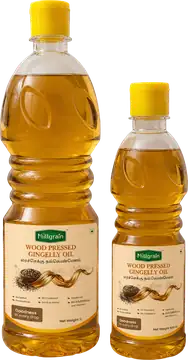
Prasad for Diwali puja is traditionally cooked fresh on the day, after a bath and in a clean kitchen, using vegetarian ingredients such as milk, ghee, jaggery, rice and fruit. Small portions are placed on a clean plate or banana leaf in front of the deity, and the lamp is lit before the offering. Gingelly oil is the traditional lamp oil in South Indian homes, and ghee is also used. After the puja, the prasad is shared with family and neighbours. Laddus can be prepared the day before, while pongal, kesari, kheer and panchamrit are cooked on the day. Grated coconut, cardamom and ghee are measured and kept ready before cooking begins, so each dish can be cooked in sequence. For a first Diwali prasad recipe, sweet pongal or kesari is a simple starting point, since each cooks in one pan.
A Diwali Puja Plate That Stays Simple
Rice, millets and sesame, which belong among Pure Organic foods, form the base of most Diwali prasad recipes. Panchamrit, sweet pongal, kesari, kheer and laddu each use only a few ingredients, so the quality of the milk, ghee, jaggery and grain shows in the taste. A small plate with one or two dishes, cooked fresh and offered beside a lit lamp, is enough for Lakshmi Puja prasad.
Frequently asked questions
What prasad is offered to Goddess Lakshmi on Diwali?
Sweets made from milk, rice, semolina, and jaggery are the usual offerings, such as kheer, sweet pongal, kesari, and laddu. Fruits, puffed rice, and panchamrit are also placed on the plate.
How many prasad items are needed for Lakshmi Puja?
The number varies by family, and one or two freshly made sweets with fruit are sufficient for a home puja. Some families offer five or more items for a fuller plate.
Which Diwali prasad can be made a day ahead?
Laddus made from puffed rice, sesame or semolina keep well in an airtight container and can be prepared the day before. Pongal, kesari, kheer and panchamrit taste fresh when cooked on the day.
What is the difference between prasad and naivedyam?
Naivedyam is the food offered to the deity during the puja. Prasad is the same food received back as a blessing and shared with the family.
Can jaggery replace sugar in Diwali prasad?
Yes, jaggery works well in pongal, laddu and sweet poha, and strained melted jaggery gives a smooth result. Sugar suits panchamrit and kesari, where colour and texture matter.